
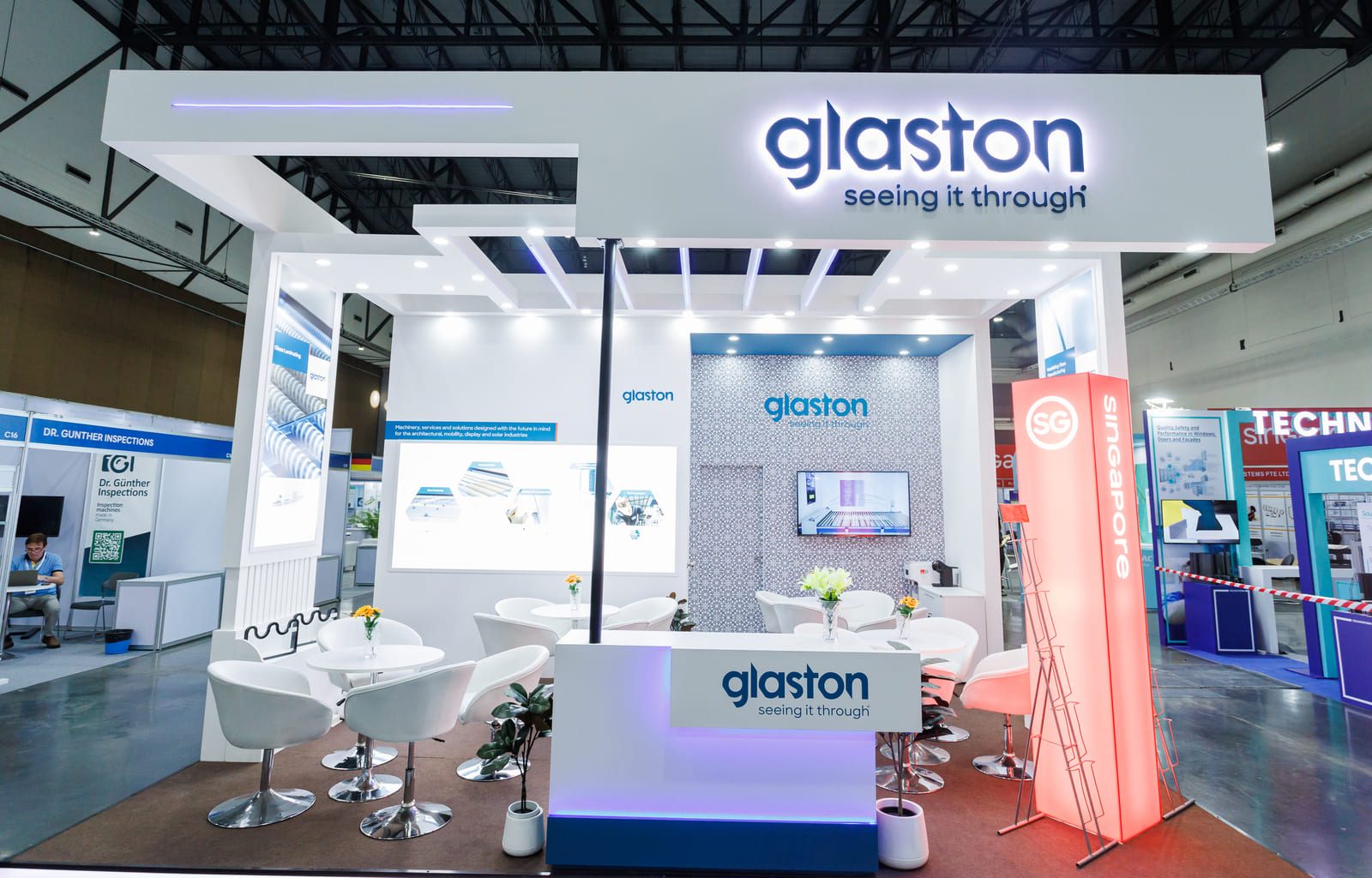
Modular Exhibition Stands Built to Be Used Again
How Modular Cost Works Across a Show Calendar
Year one, a modular system costs similarly to a custom stand of comparable size — the investment is in the system. From year two, expenditure shifts to reconfiguration, new graphics and refurbishment rather than full fabrication. The payback calculation depends on how many shows use the same or overlapping configuration. For exhibitors with a stable four to six show annual calendar at consistent sizes, the cost per show from year two is substantially lower than equivalent custom builds.
What Changes Between Shows — and What Stays
The structural frame — aluminium extrusion, interlocking panel frames or freestanding column system — stays from show to show. Graphics panels are the primary variable: dye-sublimated tension fabric or printed inserts can be replaced between events at a fraction of the full fabrication cost. Layout changes, where the floor plan allows, are managed by repositioning or removing components from the existing set.
Feature elements — lightboxes, reception counters, AV housing — can be added to the system incrementally. Each addition is a permanent component of the asset, not a one-event item.
Reconfiguration: Same Components, Different Shows
A modular system designed for a 36 sqm island stand can often reconfigure to a 24 sqm inline or a 12 sqm congress booth using the same component set. This flexibility is built into the system design from the outset — it is not a feature that can be added retrospectively. Exhibitors whose show calendar varies between a flagship event (large island) and smaller regional events (inline or corner) benefit most from a system designed for the full range of configurations they need.
Graphics Strategy for a Modular System
Dye-sublimated tension fabric is the most practical graphics substrate for most modular systems. It is lightweight, compressible for freight, replaceable per-show at low cost and holds colour well across multiple uses. Rigid printed panels offer more precise surface quality for premium environments but cost more per replacement. The right choice depends on how frequently graphics change and what the logistics constraints are between shows.
A full graphic refresh — replacing every fabric panel — can make a modular stand read substantially differently from its previous edition. A partial refresh — new key brand elements, updated product messaging — extends the visual life of the system across several shows without a full replacement cycle.
Storage and Inter-Show Management
Between events, the stand is dismantled, inspected for damage, repaired where needed and stored at the Lam Luk Ka workshop. Pixelmate Exhibition Co., Ltd. manages the stand as an asset under a storage agreement. Before each show, components are checked, graphics updated or replaced if required, and the stand repacked to the configuration and dimensions of the next event. Stands managed this way do not require a full rebriefing cycle for each show — only a change brief covering what differs.
What Happens to the Stand Between Shows
- 1
Show closes — Pixelmate Exhibition Co., Ltd. crew dismantles and packs the stand
- 2
Components returned to workshop, inspected, damage noted and repaired
- 3
Graphics assessed: unchanged, updated or reprinted for the next show brief
- 4
Frame reconfigured to the new layout if the next floor plan differs
- 5
Stand repacked and freighted to the next trade show ahead of build-up
Where Modular Has Limits
Geometric constraints
A modular system is built around a frame geometry. Layouts that fall outside the frame's module dimensions require additional custom fabrication. Exhibitors who need a completely free-form shape — curved walls, asymmetric volumes, irregular plan — may find the frame constraining relative to a purpose-built custom stand.
Year-one economics apply
Modular only outperforms custom on cost per show if the show calendar sustains regular, comparable-size events. For one or two shows per year at significantly different sizes, the reuse advantage narrows to the point where custom or rental may be simpler decisions.
Consistency can read as sameness
A stand that looks structurally identical across every show is efficient. Some buyers and event formats reward a visibly refreshed environment each edition. Graphic changes on a modular system address this partially; the structural form remains consistent between events.
Frequently Asked Questions
- Can I add bespoke feature elements to a modular system?
- Yes. Custom-built counters, bespoke lightbox headers or curved feature panels can be designed to integrate with the modular frame. These become permanent additions to the stand asset, not swappable components.
- What size range does modular work for?
- Modular systems are practical from 12 sqm upward. Below 12 sqm, the investment in a reconfigurable system is rarely recovered across the typical show schedule — rental or a simple custom build is usually more economical.
- What happens to the stand if I change my brand?
- A full rebrand requires new graphics across all fabric or panel surfaces. The frame is not affected. If the rebrand changes dimensional requirements — new heights, different feature positions — some frame modifications or additions may be needed.
- Who manages accreditation and submission at each show?
- Pixelmate Exhibition Co., Ltd. manages organiser drawing submission and accreditation at Bangkok trade shows for every modular show project. No rebriefing or re-submission documentation is required from the client beyond confirmation of the floor plan and any layout changes.
Modular stands built and managed by Pixelmate Exhibition Co., Ltd. operate across Bangkok trade shows and regional exhibitions using the same system. Storage, reconfiguration and pre-show preparation all run from the Lam Luk Ka workshop. Send your show calendar, typical floor sizes and a brief covering what changes between events — we will return a system proposal and indicative quotation.
Ready to Plan Your Stand?
Send us your show name, floor space and brief — we return a fixed, itemised quotation and initial 3D concept within one working day, at no charge and no obligation.